

News
The Late Northern Queen — Tirpitz

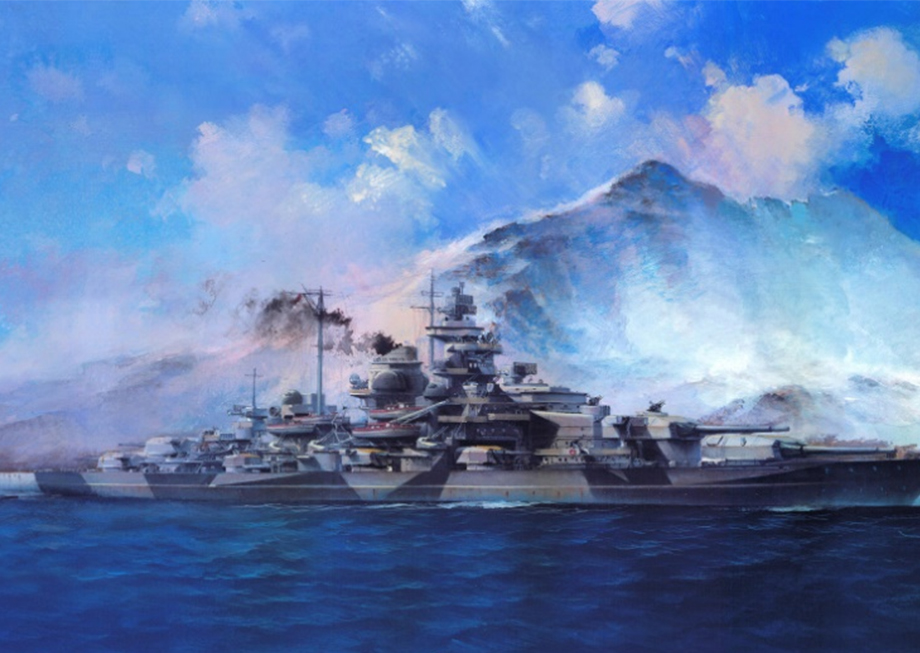
FH1133
FH1133S
[Ship Introduction Never fought in battle, nor has any military achievements ]
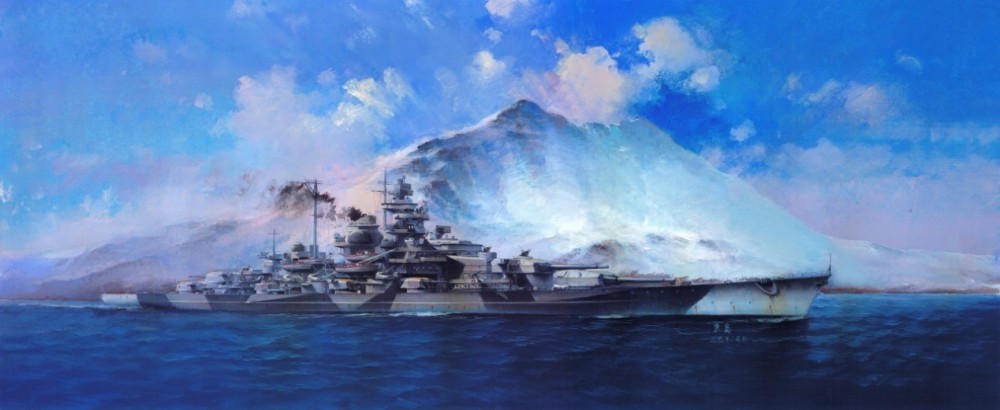
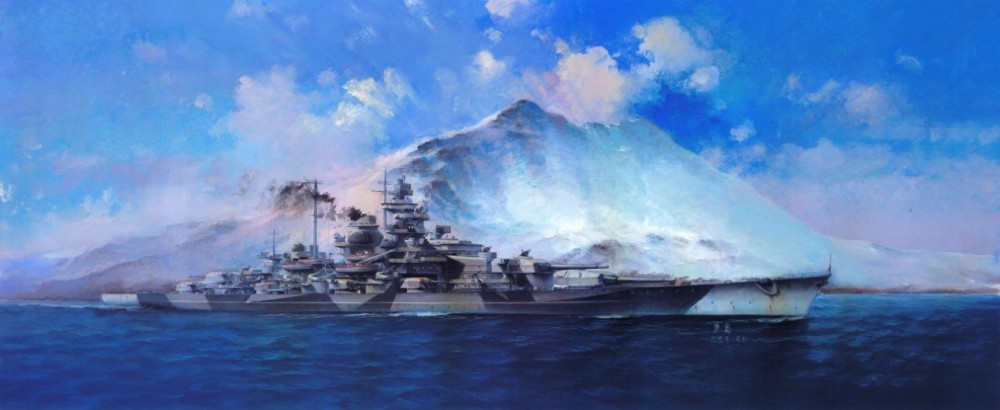
German Navy Bismarck-class battleship, second ship — Tirpitz
On November 2, 1936, the Tirpitz had its keel laid at the Wilhelmshaven Naval Shipyard. It was launched on April 1, 1939, and entered the Baltic Sea for testing on March 16, 1941. Due to frequent bombings by British aircraft, the ship did not truly become combat-capable until 1942.
The Tirpitz continued the main weapon systems and protection design of the Bismarck, while making many modifications to aspects such as radar and superstructure. After the Bismarck was sunk, the ship underwent multiple upgrades and enhancements to its air defense system, making its combat capabilities more complete than the Bismarck's.
In early 1942, war materials and resources supplied by Britain and the United States were continuously transported to the Soviet Union via the Arctic route. Germany, in order to cut off this important strategic supply line, invested a large amount of sea and air military resources, so the Tirpitz, the strongest German warship at the time, was sent to Norway.
In July 1942, the German army learned about the departure of the Allied PQ-17 convoy and decided to send a large surface fleet, with the battleship Tirpitz as the main force, to intercept it. The enormous threat posed by the Tirpitz seriously affected the judgment of the Royal Navy's high command. The British First Sea Lord, Pound, was forced to issue orders to withdraw the escort fleet, and the transport convoy was dispersed to proceed to Soviet ports. This ultimately led to the transport convoy being ruthlessly attacked by the German Air Force and submarines, resulting in 24 merchant ships being sunk and 130,000 tons of cargo destroyed, including 430 tanks, 250 fighter planes, 3,350 trucks, as well as large quantities of food, gasoline, tires, medicine, ammunition, radios, and more. However, the formidable Tirpitz did not personally take part in the massacre; after intercepting the Royal Navy's telegrams, she turned back halfway to her base in Norway to avoid being struck by the escorting warships.
In September 1943, the Tirpitz, together with the Scharnhorst, bombarded the British meteorological station on Spitsbergen Island, which was the only offensive shooting in its lifetime.
During World War II, the Tirpitz was stationed in Norway as a deterrent. Although it never took part in actual naval battles, it tied down a large number of Allied naval and air forces in the North Atlantic, and also led to multiple attacks by the British against it.
Ultimately, the Tirpitz was sunk by the Royal Air Force in November 1944.
[Development History Complex differences, restart everything]
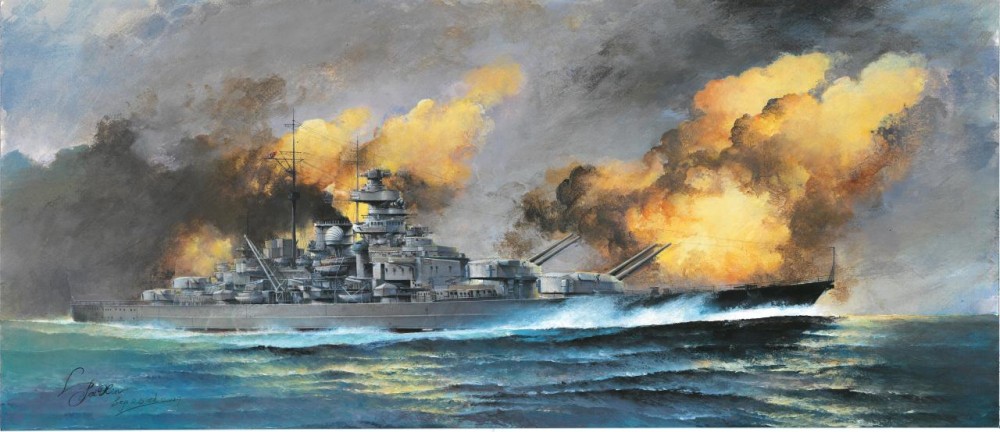
Germany Navy Bismarck-class battleship first ship — Bismarck
In 2018, Eagle Wing released a 1:700 plastic model of the Bismarck battleship FH1132. This is a model highly praised by players, and over the years, countless classic works have been created by various experts.
From the very first day the Bismarck model was released, we received enthusiastic inquiries from players: When will the Tirpitz be available?
Yeah, when will the Tirpitz be released? The number FH1133 represents Eagle Flight's internal determination: 'Once the Bismarck comes out, the Tirpitz will be released immediately!'
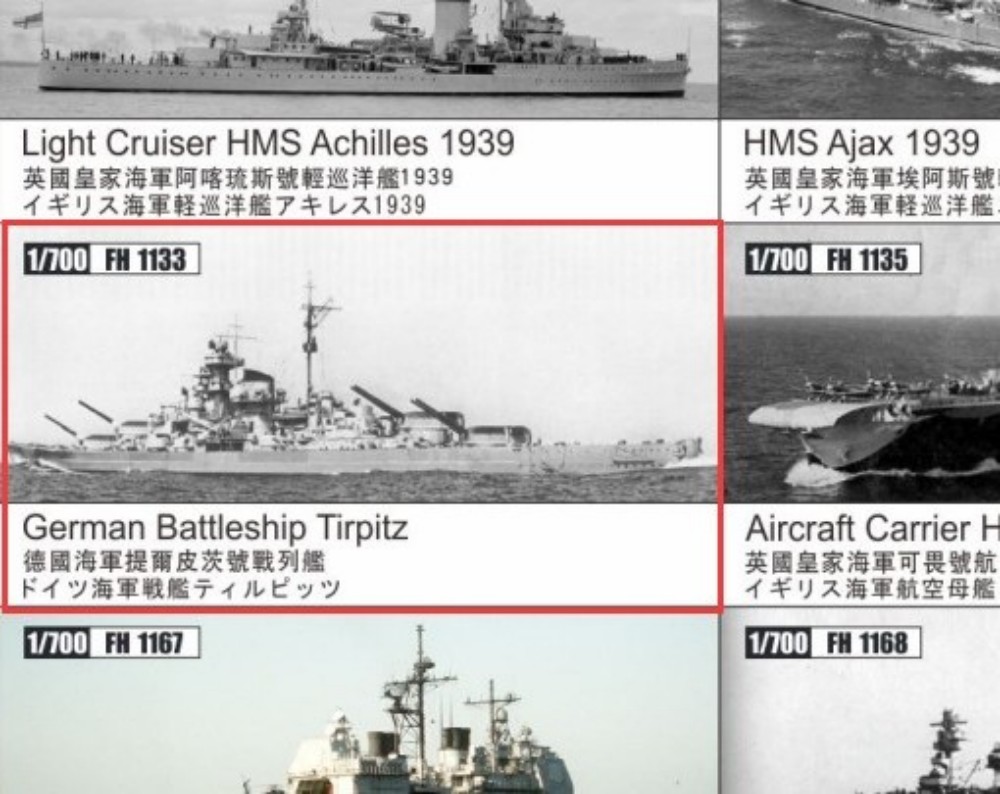
However, as for the Eagle Soaring satellite, those who understand, understand... Three years passed, then another three years... So, from the time the teaser came out until today, what has Eagle Soaring done on the Tirpitz project?
It must be admitted that at the beginning of the Tirpitz project, the impression of the design team and many players of this project was pretty much the same: we already have the Bismarck, isn’t it just a matter of adding some anti-aircraft guns and torpedo launchers on the basis of Bismarck, changing a mast, moving the crane, and then adding some small details? Various scaled models of Tirpitz from many manufacturers had basically done it this way before; it was just a byproduct of Bismarck, and one or two new molds would be enough.
However, as the development work progressed, various studies became increasingly in-depth, and after reviewing a large amount of information and original manufacturer drawings, the development department encountered more and more problems:
The hull and bottom lines of the ship are different from Bismarck's—we'll need to make a new mold!
The superstructure shapes and details of the front halves of both ships can't be done carelessly—we have to make new molds!
The shape and details of the upper structure in the second half are different too—we'll have to make a new mold!
The deck layout is completely unusable. Should we add some hidden holes to Bismarck's deck and slowly cut and drill? — Never mind, let's not hassle the players, we need to remake the mold!
……
After submitting the final design draft and development budget, everyone dared not face the boss's sullen face...
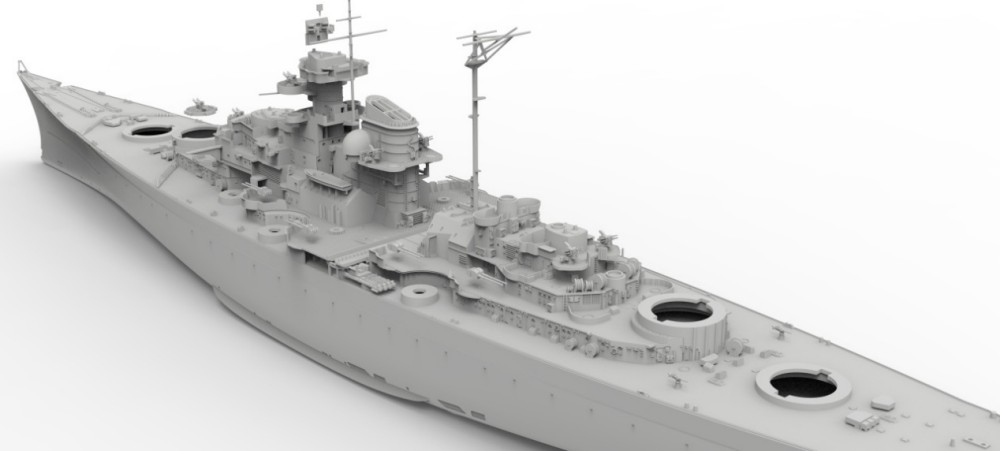
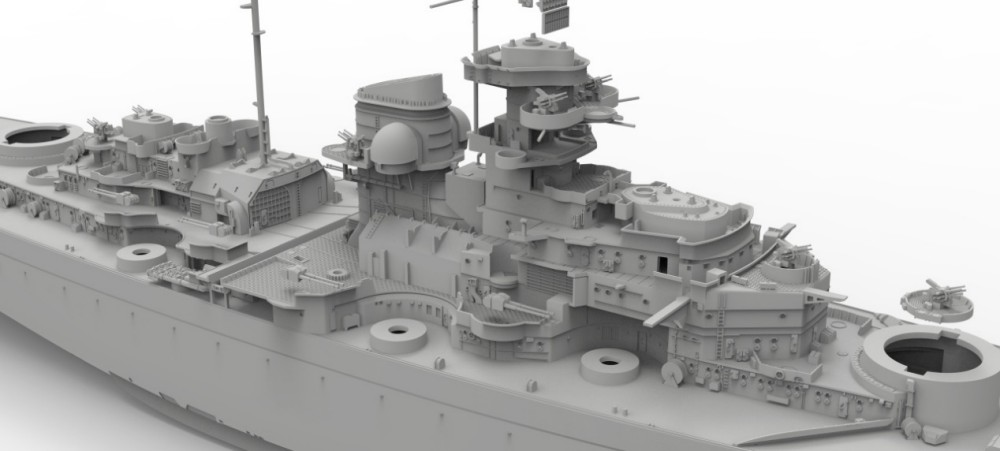
[Tirpitz New Regulation Components Overview]
As a result, this initial plan for a small project with one set of molds has become a large project with five sets of molds.
[Detail Comparison near and far, high and low, all different ]
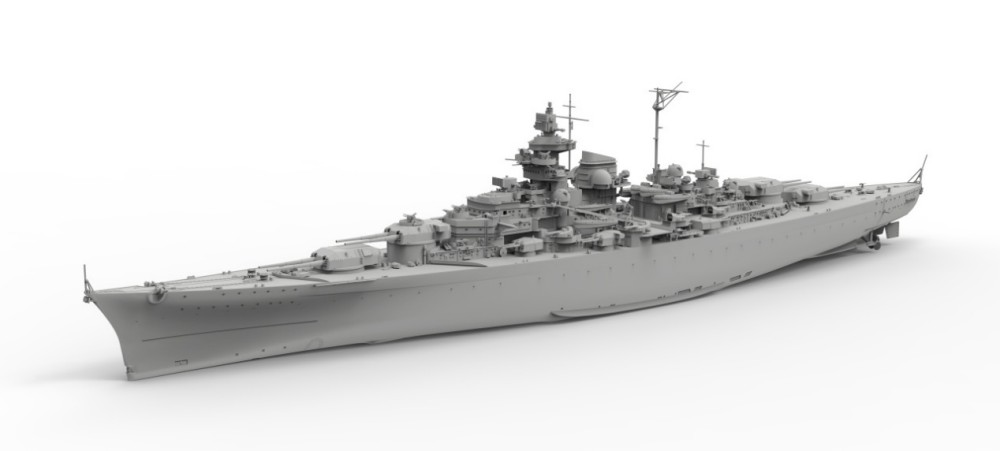
Full view of the Tirpitz
Now let's take a look at this belated Northern Queen:
The entire model represents the condition of the Tirpitz from early 1942 to 1943. This was the initial period when the 'Queen of the North' was stationed in Norway, as well as the time when it truly developed combat capability and became a new elite force of the German Navy.
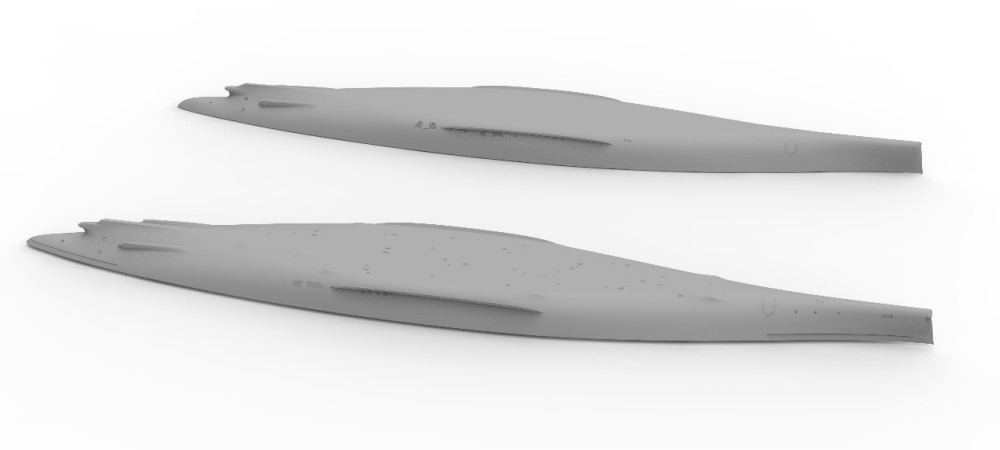
【Comparison of the Hull Details of Bismarck (Top) and Tirpitz (Bottom)】
The hull of the Tirpitz has a different shape, with more details shown. With this hull, a box of the soaring Tirpitz can serve a dual purpose, allowing the creation of both the 1942-1943 waterline version and the 1945 hull version (dog head).
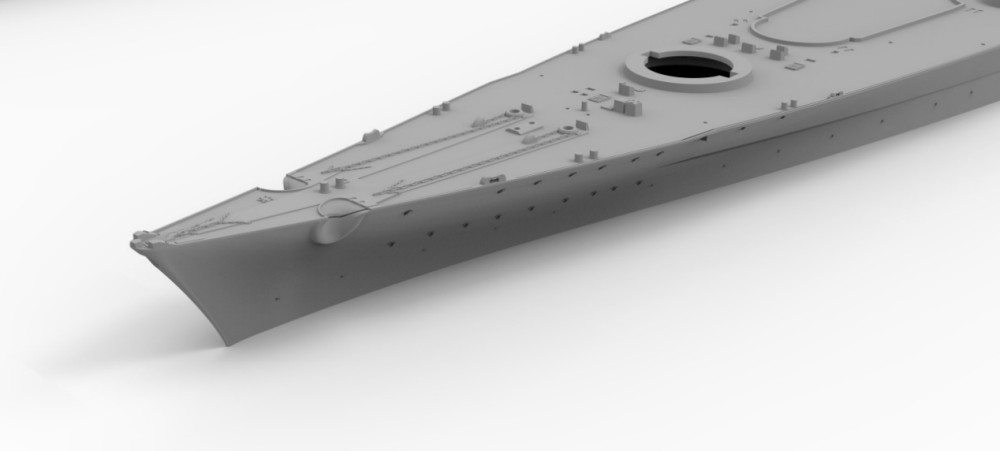
【Comparison of the bow details of Bismarck (top) and Tirpitz (bottom)】
Although both have Atlantic bows, the Tirpitz is different from the Bismarck, which was modified with a new bow after launching; her bow was constructed directly on the slipway according to the Atlantic bow design, and the curvature of their bow lines differs. As for the equipment layout on the bow deck, there are also differences.
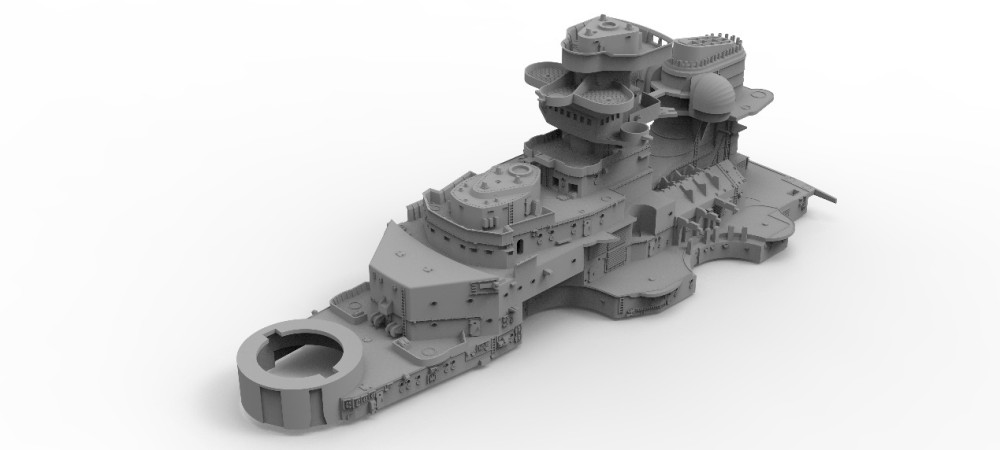
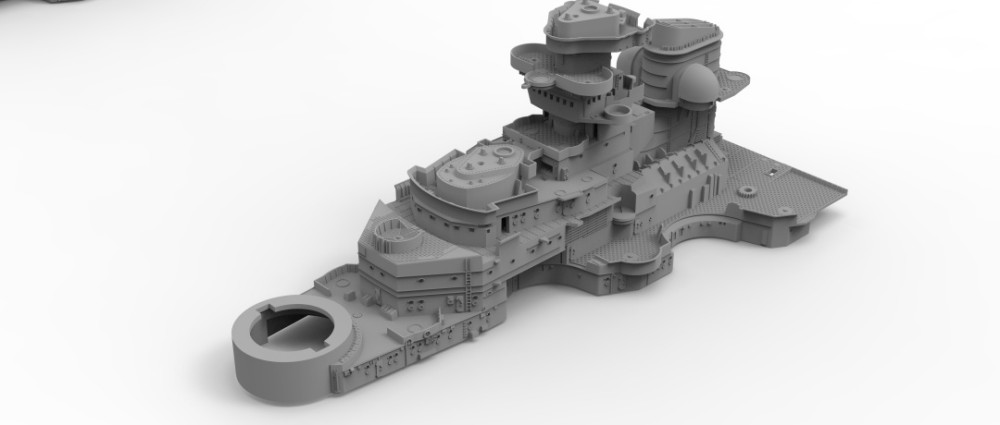
Comparison of the forward superstructure details of Bismarck (top) and Tirpitz (bottom) - Front view
The forward superstructure of the Tirpitz differed from that of the Bismarck starting from the base of turret B. The quadruple anti-aircraft gun platform at the front of the bridge, the surrounding non-slip areas, the additional platform behind the armored conning tower, and the structure of the various bridge levels are all unique features. Meanwhile, the various details on the sides of the superstructure, such as portholes, watertight doors, and wiring, are completely different from the Bismarck.
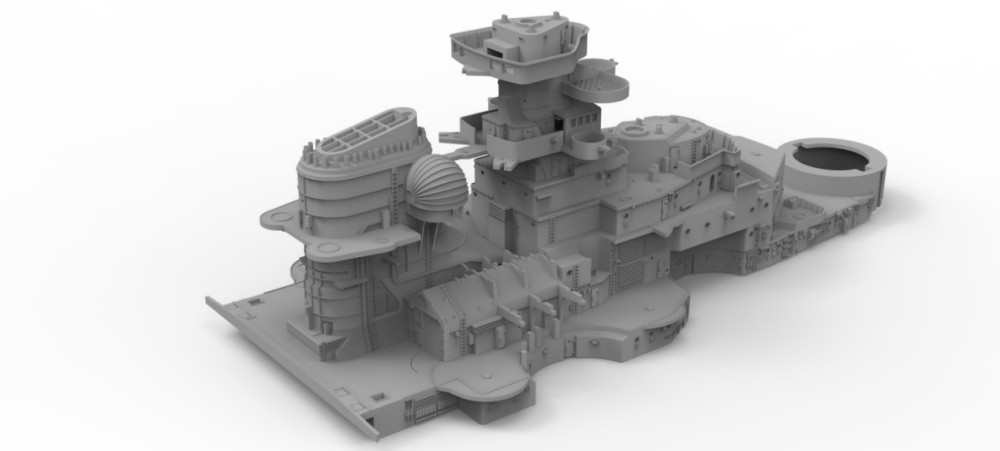
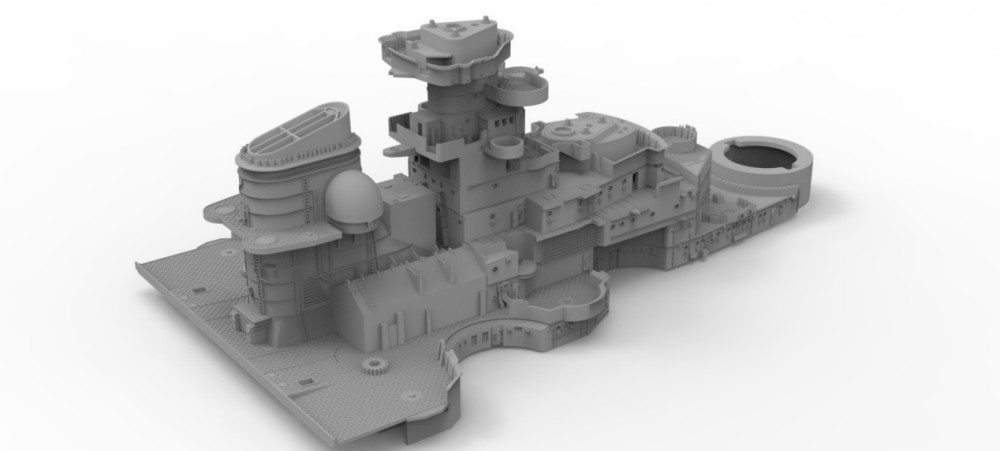
Comparison of forward superstructure details of Bismarck (top) and Tirpitz (bottom) — rear view
The funnels of the Tirpitz and Bismarck, along with their platforms, side hangars, and structural details, are all different. It is worth noting that the searchlight covers on the Bismarck's funnel platform have a skin-like effect, while the Tirpitz's are of a hard-shell structure.
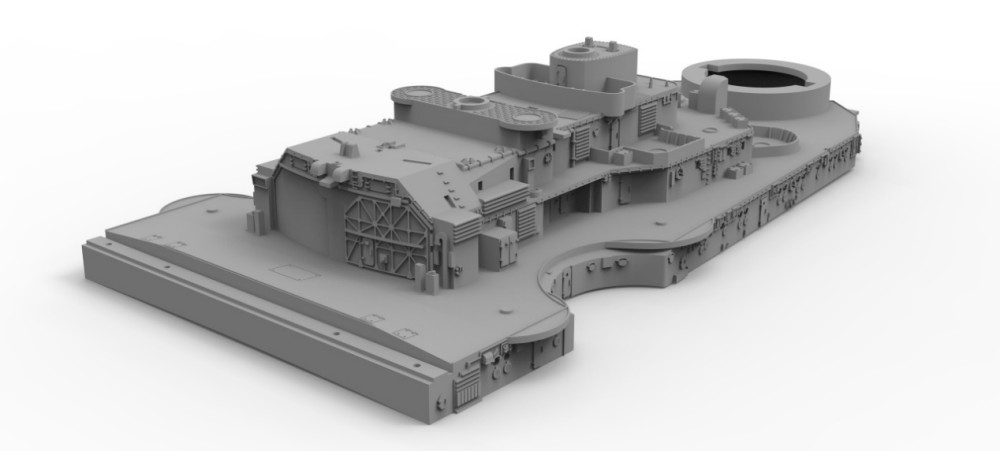
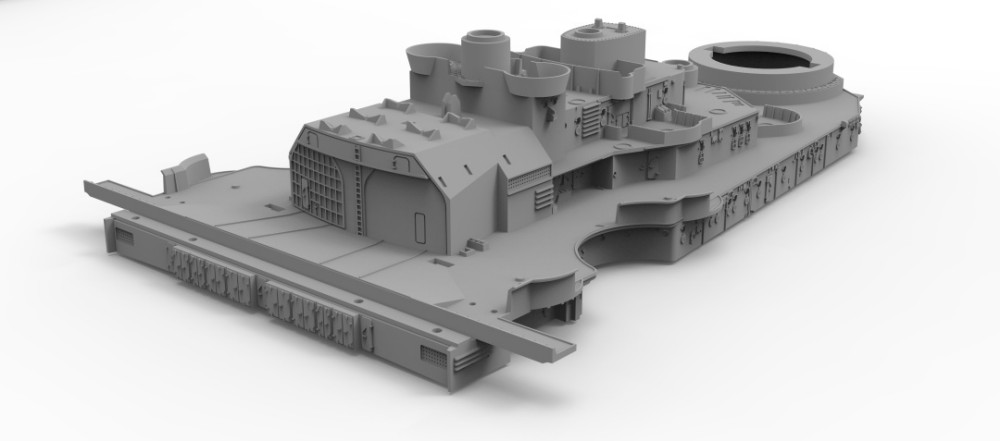
【Comparison of the Rear Superstructure Details of Bismarck (top) and Tirpitz (bottom)】
The aft superstructure hangar and various details on the walls of the Tirpitz are different from those of the Bismarck, especially the ramps on both sides of the catapult, which have a unique structure and details.
In addition to the main components mentioned above, Tirpitz's masts, torpedo tubes, various sights, and small-caliber anti-aircraft weapons are also features that differ from those of the Bismarck.
Due to space limitations, I won't list them all here, and will leave it for friends to explore on their own.
[Detailed Kit Explanation Rich configuration, dual versions optional ]
FH1133 Tirpitz Standard Edition
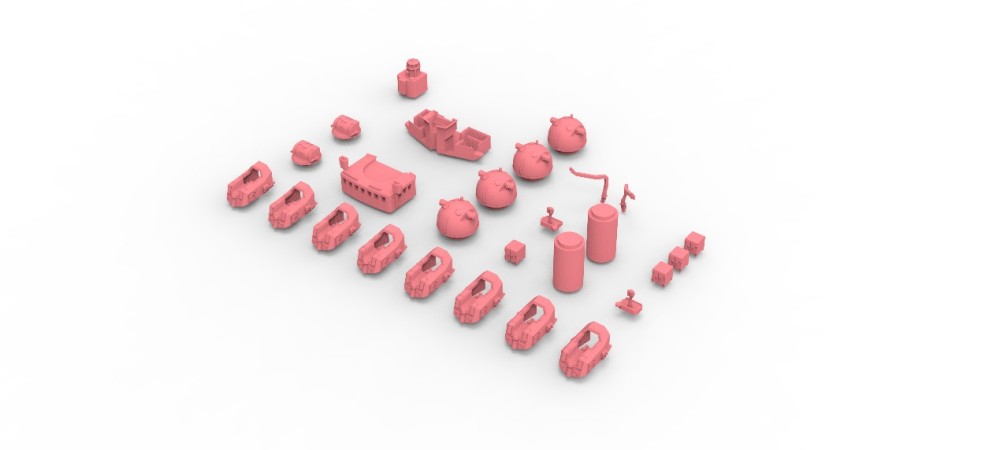
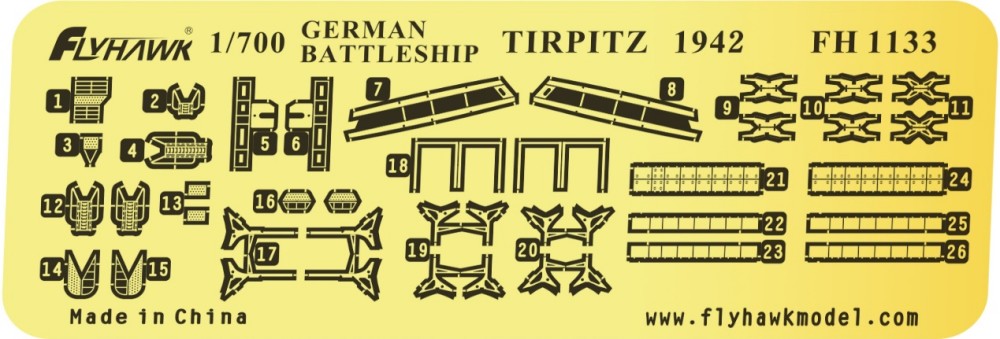
As a launch bonus, the standard version of Tirpitz comes with a set of 3D printed parts and one photo-etched sheet.
The printed parts include a 105mm anti-aircraft gun turret, a 4m rangefinder, and a rear mast platform, which can effectively enhance the product's detail expression.
The etched parts include some basic modification components such as boat brackets and ladders.
FH1133S Tirpitz Deluxe Edition
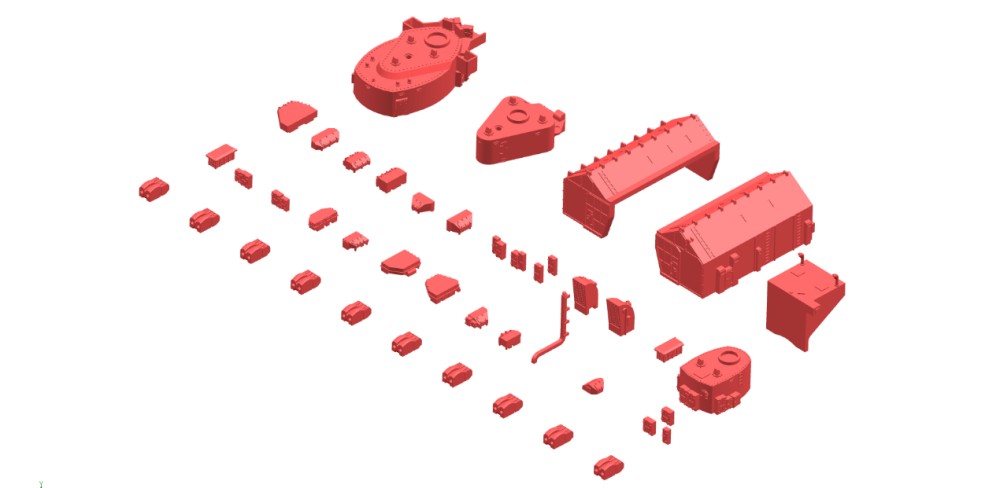
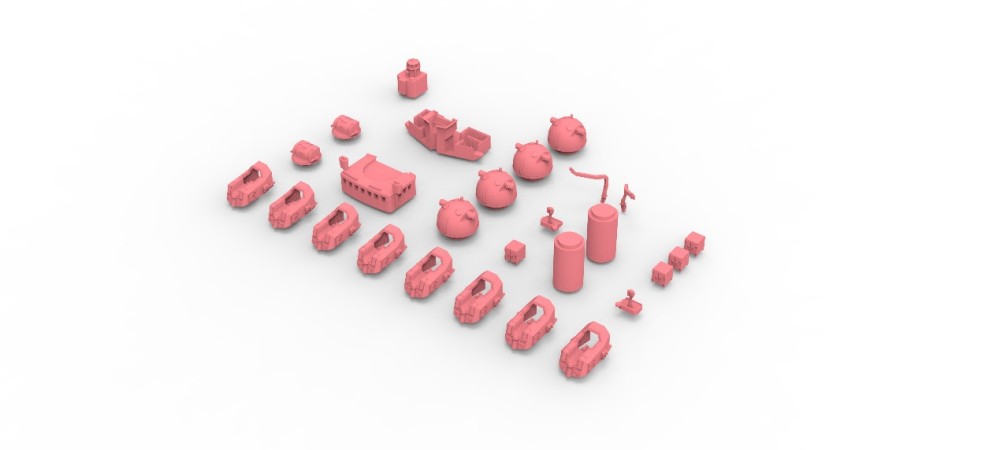
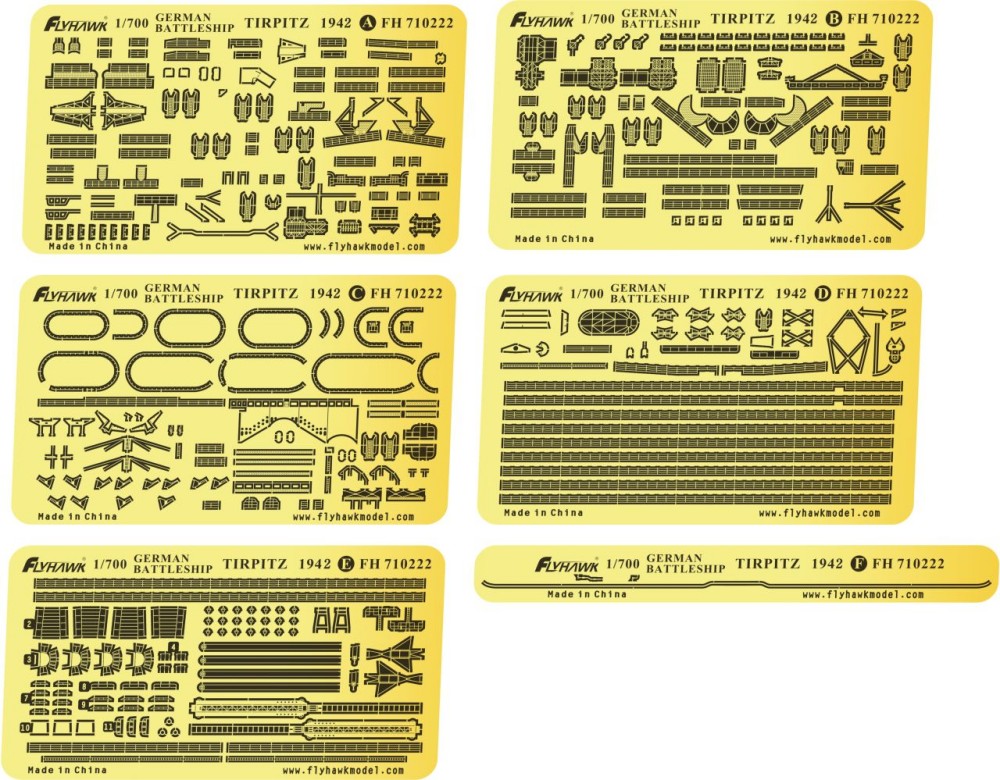
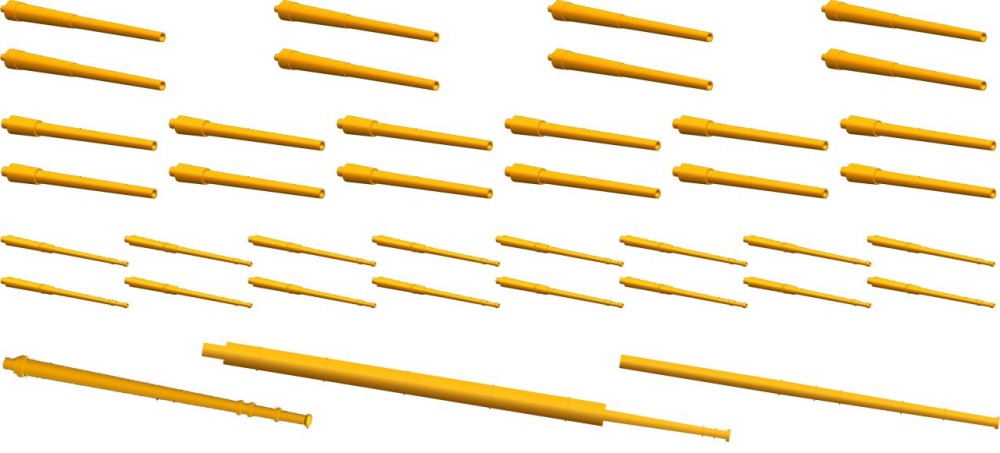
The deluxe version of Tirpitz, in addition to including 1 set of 3D-printed parts and 1 photo-etched sheet from the standard version, also comes with an additional set of 3D-printed parts, 6 photo-etched sheets, and 39 cast metal parts.
The newly added upgraded print version includes more detailed components such as the armored command tower, hangars on both sides of the chimney, variously shaped vents on the deck, and further adds details on the basis of the standard version.
The newly added photo-etched parts include additional fine details for various parts of the ship, as well as conventional components such as railings, hoops, and thin plates, along with important details like the radar being enhanced.
The vehicle's metal components include 8 × 380mm main guns, 12 × 150mm secondary guns, 16 × 105mm anti-aircraft guns, and 3 metal masts in different positions.
Welcome to purchase